Mudras and Bandhas Basics
A careful beginner guide to mudras, bandhas, practice context, teaching scope, and safety boundaries for YTT-200 students.
Learning purpose
Compare gesture, seal, and lock contexts while moving individual terms to R04 and avoiding unsupervised high-risk recipes.
Learning objectives
- Distinguish Mudra and Bandha terminology across contexts.
- Recognize breath-pressure, retention, and supervision boundaries.
Prerequisites
Subjects
Key topics
- Mudras
- Bandhas
- Breath retention
- Subtle body
- Scope
- Mudra
- Bandha
- Mula Bandha
- Uddiyana Bandha
- Jalandhara Bandha
- Maha Bandha
On this page
Mudrā and bandha are source-dependent practice terms, not two uniform exercise categories. Mudrā can identify a hand gesture, ritual sign, whole-body seal, or a Haṭha-yoga method involving breath and pressure. Bandha can name a binding or seal within particular practice systems. YTT-200 literacy begins by asking which text, lineage, teacher, and method is meant before deciding whether any practice belongs in a class.
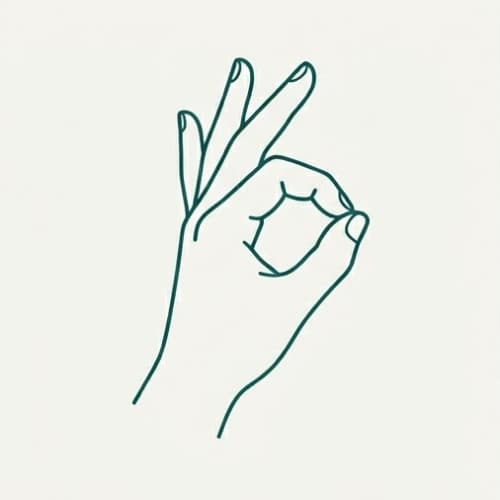
One Word Can Name Different Practices
The Hatha Yoga Project's source survey distinguishes hand gestures found in tantric materials from the physical seals central to early systems called Haṭha. Modern studios may use mudrā mainly for optional hand positions and bandha for internal muscular cues. These usages overlap, but they are not interchangeable evidence about premodern practice or contemporary anatomy.
A Recognition Map, Not a Recipe
- Jñāna (often written gyan) and Chin Mudrā are common modern labels for hand gestures; their palm orientation, symbolism, and distinction vary by school.
- Yoni Mudrā can name substantially different practices, including a hand gesture or a sensory-withdrawal method. The name alone is not an instruction.
- Añjali Mudrā is a joined-hands gesture with devotional, greeting, ritual, and contemporary class contexts; no single interpretation applies to every participant.
- Nāsāgra or related hand-position labels may accompany alternate-nostril methods. Finger placement does not authorize force or retention.
- Jālandhara, Uḍḍīyāna, and Mūla Bandha are named in Haṭha sources, while Mahā Bandha coordinates multiple practices in some systems. They require more than a glossary definition.
These named items are staged as non-route records in the R04 Integrated Practices reference collection. They support comparison and attribution without turning each term into a thin lesson or a clickable practice page.
Hand Gesture, Attention, and Student Choice
A low-load hand gesture can be offered as one possible attentional support, but even a small gesture is not neutral for everyone. Wrist, finger, shoulder, pain, cultural, or religious considerations may make relaxed hands preferable. Describe the visible arrangement and the source-specific symbolism separately, then offer hands open, resting, or otherwise comfortable as equal choices.
Bandha Is Not a Universal Alignment Cue
Bandha instruction may change breathing, internal pressure, abdominal effort, pelvic-floor behavior, and head or neck position. Calling Mūla Bandha a permanent pelvic-floor squeeze, Uḍḍīyāna a generic abdominal brace, or Jālandhara a chin-tuck alignment rule erases both textual variation and individual anatomy. Yoga teachers do not assess pelvic-floor disorders, prescribe rehabilitation, or infer internal action from appearance.
M11's nāḍī and cakra lessons explain why subtle-body maps should not be relabeled as nerves, vessels, glands, fascia, or organs. The same boundary applies here: a traditional account of prāṇa or bindu can be studied respectfully without presenting it as a medical mechanism.
A Four-Level Teaching Boundary
- Recognition: pronounce and identify a term while naming its source and variation.
- Optional gesture: describe a comfortable hand position, neutral alternatives, and no guaranteed result.
- Breath-linked practice: teach only within your demonstrated training, with no-retention and stop-or-skip routes.
- Pressure, retention, or combined bandha: refer to qualified, context-specific instruction rather than improvising from a manual.
Source-and-Scope Reflection
Choose one named mudrā or bandha from a class you have taken. Write the exact instruction, the teacher or lineage attribution, any breath or pressure demand, available alternatives, and the claimed effect. Mark each claim as textual, lineage-specific, modern convention, personal report, or biomedical. What would you need to verify before repeating it as a teacher?
Exam Connection
- Mudrā is broader than a list of hand gestures, and the same name may identify different practices.
- Bandha terminology is source-dependent and may involve breath, pressure, and prerequisites.
- A traditional subtle-body explanation is not a biomedical map or a treatment claim.
- For a YTT-200 decision, identify context and risk before technique; ordinary breathing, alternatives, stop, skip, and referral remain available.
Sources and review notes
- Hatha Yoga Project — Roots of Yoga chapter summaries
Academic overview distinguishing hand gestures from Haṭha-yoga seals and documenting textual variation.
- SOAS — The Hatha Yoga Project
Historical and philological context for physical-yoga practices.
- NCCIH — Yoga: Effectiveness and Safety
General safety guidance, including qualified instruction and caution with forceful breathing.
- Yoga Alliance — Scope of Practice
Source citation, competence, consent, and referral boundaries for yoga teachers.
Continue learning
Continue learning
Continue with published lessons, references, editorial reading, or a short exam check chosen for this topic.
Related Lessons
Lesson
Subtle Body Basics: Koshas, Nadis and Chakras
Learn to read kosha, nadi, and chakra maps with source, tradition, translation, and medical boundaries clearly labeled.
Lesson
Breath Phases and Retention Context
A source-aware guide to inhalation, exhalation, retention, ratio notation, and why breath holding is not a required beginner progression.
Lesson
Pranayama Techniques and Contraindications
A safety-decision framework for introducing, simplifying, stopping, or referring pranayama without treating a contraindication list as medical clearance.
Lesson
Kriyas and Cleansing Practices Overview
A safety-first YTT-200 overview of kriyas, neti, kapalabhati, cleansing-practice scope, and when not to self-practice.
Lesson
OM, Mantra, and Chanting Basics
A respectful YTT-200 introduction to OM, mantra, chanting, cultural context, student choice, and teaching scope.
Lesson
Hips, Pelvis and Spine
Relate hip, pelvic, and spinal movement to task, support, and range without prescribing one neutral pelvis or diagnosing posture.
Related quick-reference records
- MudraAnjali MudraQuick reference · Choice-sensitive
- MudraChin MudraQuick reference · Choice-sensitive
- BandhaJalandhara BandhaQuick reference · Qualified supervision
- MudraJnana MudraQuick reference · Choice-sensitive
- BandhaMaha BandhaQuick reference · Qualified supervision
- BandhaMula BandhaQuick reference · Qualified supervision
- MudraNasagra MudraQuick reference · Choice-sensitive
- BandhaUddiyana BandhaQuick reference · Qualified supervision
- MudraYoni MudraQuick reference · Qualified supervision