Anatomy for Yoga Students
Build a precise anatomy vocabulary, observe movement without diagnosing it, and evaluate body claims before applying them in yoga teaching.
Learning purpose
Establish anatomical position, movement language, variation, and the boundary between education and diagnosis.
Learning objectives
- Use foundational anatomy and movement terms.
- Separate movement observation from medical assessment.
Prerequisites
Required modules
Key topics
- Anatomical position
- Directional terms
- Planes of movement
- Observation
- Claim literacy
- Teacher scope
- Flexion
- Extension
- Rotation
- Abduction
- Adduction
- Joint
On this page
Anatomy describes body structures; physiology studies how those structures function. A YTT-200 student does not need to memorize every structure or imitate a clinician. The useful foundation is smaller and more demanding: describe location and movement precisely, recognize that systems work together, respect human variation, and know when a teaching observation has crossed into medical assessment.
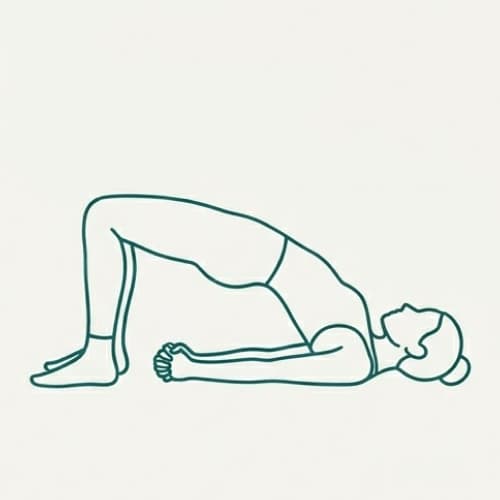
A Shared Reference Map
- Anatomical position is a reference convention: standing upright, facing forward, arms at the sides, and palms forward. Terms still refer to this map when the body is seated, prone, supine, inverted, or moving.
- Directional pairs locate one structure relative to another: anterior/posterior, superior/inferior, medial/lateral, proximal/distal, and superficial/deep.
- The sagittal plane divides right and left, the frontal or coronal plane divides front and back, and the transverse plane divides upper and lower portions. Real movement commonly crosses more than one plane.
- Right and left belong to the person being described, not to the observer. A teacher should name the student's right side as the student's right side.
Movement Terms Describe, They Do Not Prescribe
- Flexion usually decreases the angle between body parts; extension usually increases it or returns from flexion. The exact appearance depends on the joint and starting position.
- Abduction moves away from the body's midline and adduction moves toward it. At fingers and toes, the reference midline is specific to the hand or foot.
- Internal and external rotation describe a bone turning toward or away from a reference orientation. A whole pose cannot always be reduced to one joint action.
- Lateral flexion describes side-bending of the axial skeleton. Rotation describes turning around an axis. Several regions may contribute to what is visible.
- Pronation, supination, dorsiflexion, plantar flexion, elevation, depression, protraction, and retraction are region-specific terms; learn what structure each term refers to before using it as a cue.
Structure, Function, and Systems
Cells form tissues, tissues form organs, and organs cooperate in systems. A movement therefore cannot be explained by bones or muscles alone: joints, connective tissues, sensory information, motor control, circulation, respiration, energy supply, and the environment all participate. System labels are useful study organizers, not proof that one structure caused a student's pain, range, mood, or performance.
Variation Is Expected
People differ in proportions, joint surfaces, tissue history, strength, skill, age, fatigue, health, previous injury, attention, and goals. The same person also changes across time and tasks. A range or shape can be described without ranking it as normal, advanced, blocked, weak, unstable, or damaged. Anatomy supports better questions; it does not produce a universal pose template.
Four Levels of Teacher Language
- Anatomical description: 'The elbow moved from flexion toward extension.' This names a visible relationship without assigning a cause.
- Movement observation: 'The student shifted weight toward the hands during the transition.' This can guide a question about the task and experience.
- Teaching option: 'Would you like to try the transition at a wall and compare the effort?' This is voluntary, reversible, and followed by feedback.
- Medical assessment: 'Your nerve is compressed because your shoulder is unstable.' This proposes pathology and causation; it requires appropriate clinical competence, examination, and authority.
Read Anatomy Claims Before Repeating Them
- Identify the claim. Is it a structure label, a movement description, a proposed mechanism, a health outcome, or a treatment recommendation?
- Check the source. Prefer a current standard anatomy or physiology text, professional health organization, and qualified reviewer over an unsourced diagram, social post, or training slogan.
- Match evidence to wording. A plausible mechanism is not proof that a pose detoxifies an organ, balances hormones, regulates a condition, prevents injury, or corrects posture.
- Check scope. Even an accurate health fact does not authorize a yoga teacher to screen, diagnose, prescribe rehabilitation, or clear a student for practice.
- Use the smallest defensible statement. Describe the educational task and available choices; refer individual health questions to an appropriately qualified professional.
Key Terms
- Anatomy: the study of body structures and their relationships.
- Physiology: the study of how living structures function.
- Anatomical position: the standardized reference orientation used for directional language.
- Plane: an imagined surface used to describe sections or movement orientation.
- Observation: a bounded account of what can be seen, heard, or reported, separate from a diagnosis.
- Medical assessment: a clinical process used to investigate health status or pathology; it is not created by adding anatomy words to a yoga cue.
Practice Reflection
Choose a simple transition and write four lines: one directional description, one joint-movement description, one neutral observation, and one optional teaching experiment. Circle any word that implies damage, weakness, correction, regulation, or treatment. Rewrite that line so it states only what the available information supports.
Quick Review
- Anatomical position, directional pairs, planes, and joint terms create a shared descriptive map.
- Body systems cooperate; one visible position cannot identify a single internal cause.
- Description, observation, teaching options, and medical assessment are different levels of language and authority.
- Variation is expected, and anatomy does not establish one ideal yoga shape.
- Health claims require suitable evidence and scope; warning symptoms require pause and appropriate support, not amateur diagnosis.
Sources and Further Study
- OpenStax Anatomy and Physiology 2e: Anatomical Terminology
Betts et al., 2nd edition, 2022; accessed 2026-07-17. Standard open anatomy text used for anatomical position, directional terms, and planes. Source diagrams and wording are not reproduced.
- OpenStax Anatomy and Physiology 2e: Structural Organization of the Human Body
Betts et al., 2nd edition, 2022; accessed 2026-07-17. Used for levels of organization and the organ-system study model.
- OpenStax Anatomy and Physiology 2e: Types of Body Movements
Betts et al., 2nd edition, 2022; accessed 2026-07-17. Used for neutral joint-movement vocabulary, not universal yoga cues.
- Yoga Alliance: Scope of Practice
Professional-scope example, updated 2020; accessed 2026-07-17. Used for competence and referral boundaries. Teachers must also follow their actual credentials, role, venue policies, and jurisdiction.
Continue learning
Continue learning
Continue with published lessons, references, editorial reading, or a short exam check chosen for this topic.
Related Lessons
Lesson
Asana and Alignment Basics
Use purpose, base, load, range, breath, effort, variation, and stop signals to make student-choice-centered asana decisions.
Lesson
Alignment Anatomy Deep Dive
Synthesize alignment decisions through cases using purpose, observation, feedback, load, range, options, consent, and scope.
Lesson
Skeletal System, Joints and Spine
Study skeletal divisions, joint structures, and spine regions without turning simplified anatomy into injury assessment or universal alignment rules.
Lesson
Muscular System and Movement
Understand muscle organization, contraction, and coordinated movement without reducing a student's experience to one weak, tight, or inactive muscle.
Lesson
Nervous and Endocrine Systems
Learn the basic organization of neural and hormonal signaling while rejecting nervous-system regulation, hormone-balancing, and diagnostic claims outside teacher scope.
Lesson
Cardiovascular, Respiratory and Breathing Systems
Connect circulation, ventilation, gas exchange, and breathing muscles while keeping breath teaching conservative and outside medical assessment.
Lesson
Body Systems Survey and Teacher Scope
Survey lymphatic, immune, digestive, integumentary, urinary, and reproductive roles while practicing consent, claim literacy, and referral.